

Most board reviews are close to worthless. Three conversations on why, and what the good ones do differently.
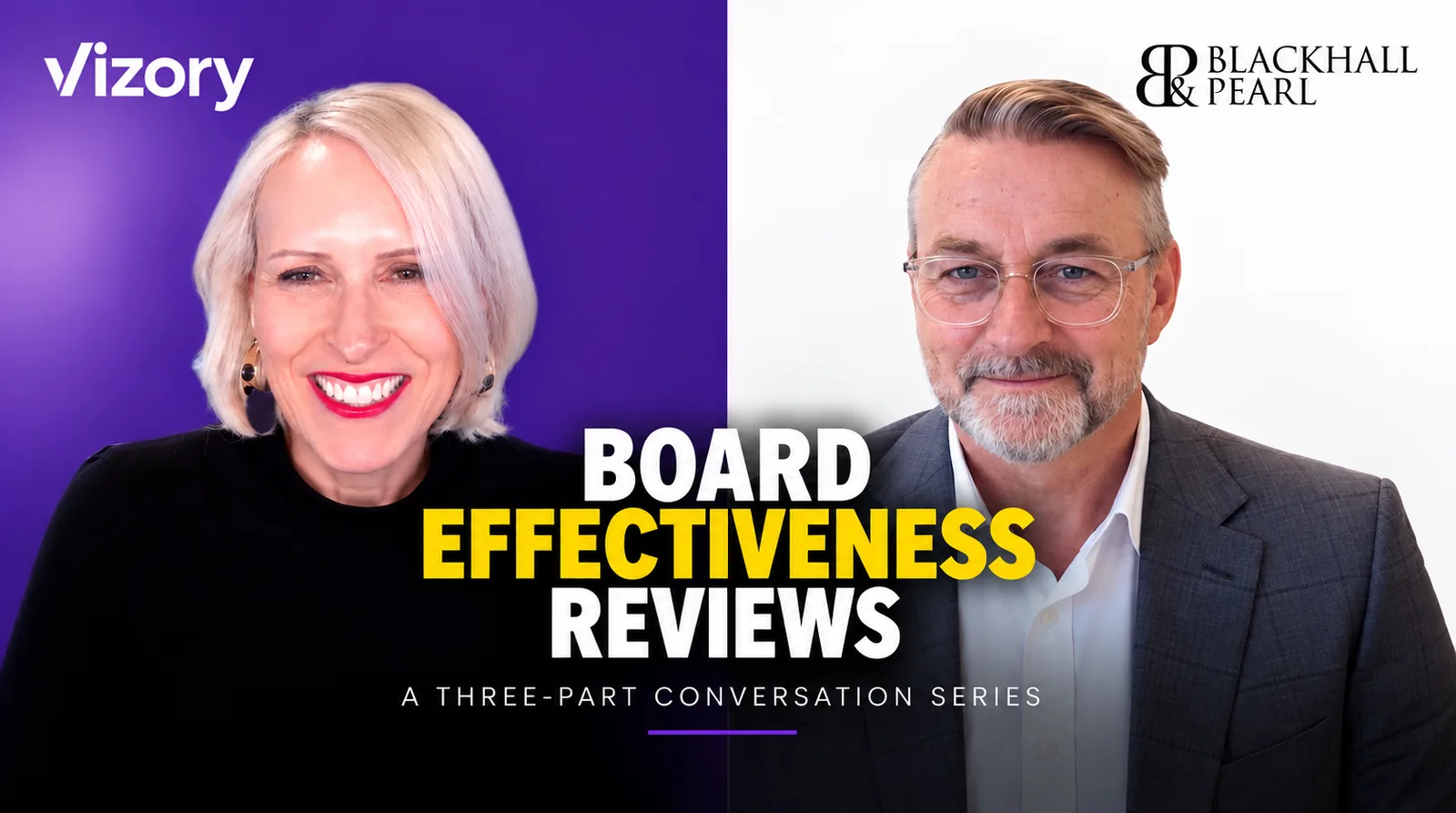
Tim holds a doctorate in board performance analytics and runs board advisory at Blackhall & Pearl. He has conducted more ASX board reviews than almost anyone in the country — and has declined a review because the real problem was not effectiveness. He carries the authority on the science and practice of reviews.
Kirsten has spent over 30 years building products and now sits on private and PE-backed boards as a non-executive director. She built Vizory off roughly forty director interviews and has run reviews from the inside. She brings the operator, director, product and AI perspective Tim does not claim.
The two came together over AI in the boardroom, which is the through-line across both series. Their collaboration runs on the principle of peers working different patches — not mentor and apprentice.
The arc is simple. Episode one asks whether you should do a review at all. Episode two covers how to run one that is worth the money. Episode three is where the real value hides — the part most reviews skip entirely.
Not every board is ready for a review. The test before you spend a dollar is whether the board can be honest with itself and whether the review is tied to something real. A private board that cannot satisfy both has a different problem — one a survey will not fix. Private boards, it turns out, probably need reviews more than listed ones, because nothing external forces them to look at themselves.
External reviewers get candour that internal ones cannot. In a founder-led business, the board-management dynamic is usually the central finding — and that is the one thing an insider cannot raise safely. The right sequence: survey for a baseline, interviews for the truth, chair and CEO interviewed separately, then distil. A method is still not where the value comes from.
The survey is ten percent. The report — three colours telling the board what it already told you — is ten percent. The value is in what happens after everyone leaves the room: whether anyone owns the so-what, whether the chair hears the findings privately first, and whether two or three concrete changes actually get made. Tim has two questions he asks every director. The answers are the whole finding.
Not every board is ready for one. The test is whether the board can be honest with itself and whether the review is tied to something real. A private board that cannot do both has a different problem — a survey will only put a bandage over it. If the conditions are met, private boards probably need reviews more than listed ones, because nothing external forces them to look at themselves.
External reviewers get candour that internal ones cannot. People say things to an outsider they would never say to a colleague. In a founder-led business, the board-management dynamic is usually the central finding — and that is the one thing an insider cannot surface safely without damaging a relationship they need.
The survey is ten percent of the value. The interviews are where you find out what people actually think. The real value is in what happens after the report — whether anyone owns the so-what, whether the chair hears the findings privately first, and whether two or three concrete changes actually get made. A review that gets filed is not a review.
The first: if you were chair tomorrow, what would you do? It skips the sanitised rating language and tells you what people actually think is wrong. The second: name the three strategic drivers of the business. If you get more than three different answers, the board is not aligned on what the business is even for.
The video series covers the theory. The service page covers what a review with Kirsten involves, when it is the right tool, and what to expect.
The Board Effectiveness service page covers what a review involves, when it is the right tool, and what to expect. Or start with a conversation.