

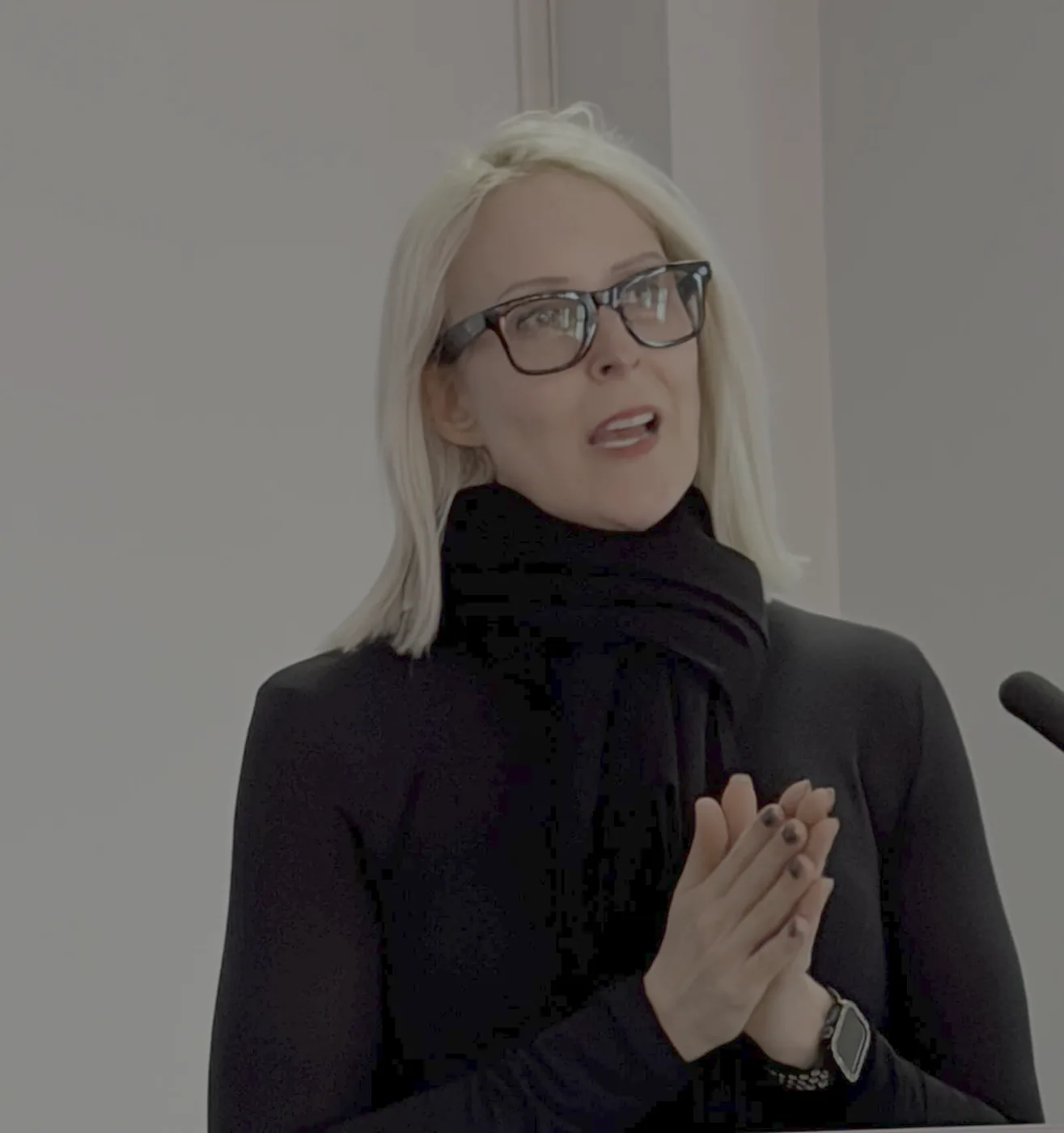
I'm a non-executive director on three boards. I've sat through the review that produced a tidy document, a polite discussion, and nothing that changed how the board actually worked.
This is built to avoid that. A board performance evaluation in three parts: an anonymous survey, confidential interviews with every director, and a board-only debrief that closes with three to five changes — each with an owner and a date.
A board review has one real failure mode. The report gets filed, the room agrees it was useful, and twelve months later the same three problems are still there.
Usually it isn't the findings that fail. It's the design. Surveys get scored but never interrogated. Interviews collect views nobody is willing to report plainly. The debrief becomes a presentation instead of a decision. And management sits in the room while the board tries to discuss the board.
So the process runs backwards from the outcome. Everything in it exists to produce a short list of changes the board will actually make — and to protect candour hard enough that the findings are worth acting on.
About fifteen minutes, across seven themes, scored with room for written answers. It gives breadth and a baseline you can run again in two years and compare.
Every director answers the same questions, so you find out where the board agrees, and where it only appears to.
45 to 60 minutes with each director, plus the CEO and company secretary where scope allows. The survey gives scores; the interviews give the story behind them.
The most useful finding is usually the gap — someone rated an area highly, then describes a problem. That gap is the work.
The Chair first, one-on-one, so nothing about their own leadership lands as a surprise in the room. Then the full board, in a session management doesn't attend.
It ends with three to five agreed actions, each with an owner and a date, written down before anyone leaves.
Whether the board has the mix needed for the strategy ahead, not the business as it is today — and whether renewal is paced to avoid a capability gap.
Whether the most important issues get the most time, whether dissent is genuinely drawn out, and whether committees do real work.
Whether papers set directors up to decide or to be informed after the fact, and whether they arrive early enough to be read properly.
Whether the board shapes strategy or receives it, and whether it would see a serious risk coming or find out late.
How disagreement actually plays out. Who dominates, who goes quiet, and which views are being held back.
Whether management brings the board a problem early or waits until it's fixed or unavoidable — and what the board does that genuinely helps.
Whether the board is equipped to govern in a market where technology can remake the business model. Covered below, in more depth than a review usually goes.
Optional, and handled carefully. Where each director adds most value, and where the board isn't using someone well.
Board effectiveness reviews are usually run by governance generalists. They handle technology and AI by asking whether the board has "digital skills" and moving on. It's the question every board passes and no board learns anything from.
I spent the last two years building an AI product for board directors and interviewing more than forty non-executive directors about it. So this is the dimension where I can ask the questions that actually expose a gap:
In ASIC v Bekier [2026] FCA 196, the Federal Court considered directors' use of AI in a board setting for the first time in Australia. The Court accepted that AI can legitimately help directors manage information overload — but held that the duty of care under section 180(1) is personal and non-delegable, and cannot be displaced by an AI summary.
The Court also observed that any use of AI should be controlled and transparent, and that boards would be prudent to deliberately govern AI use through a formally adopted policy rather than leaving it to informal shadow use.
That moves board AI readiness out of the "emerging topic" basket and into duty of care. Most boards do not yet have a policy, and many do not know whether AI helped write the papers in front of them.
A note on what this isn't. The conclusion of a review is not that your board needs more technology, and it certainly isn't that it needs to buy something from me. Plenty of boards are adequately equipped, and saying so plainly is what makes the finding worth anything. This dimension is done with teeth; the rest of the review is done properly, and the whole thing stays a board effectiveness review rather than a technology pitch.
Hear the long version — Board Effectiveness Reviews, with Tim Boyle →Most board reviews are run by consultancies and former company secretaries. That work can be good. But there's a difference between assessing a board from the outside and knowing what it feels like to get a 300-page pack on a Friday for a Monday decision.
I'm a non-executive director on three boards and a board adviser. While building Vizory I interviewed more than forty directors — ASX-listed through to private and not-for-profit — about what makes the boards they sit on effective, and where they quietly struggle. That research sits underneath every question in this assessment.
I'm also being mentored in board review practice by Tim Boyle, Chairman of Blackhall & Pearl and one of Australia's leading board advisers, with whom I co-host the AI in the Boardroom series.
On a small board people can guess who said what. Answers are aggregated to the point where no response is traceable, even where that blunts the edge of a finding.
Notes capture themes and examples, not quotes that could identify a speaker. I don't hand over raw responses, and I don't quote directors even when pushed in the room.
Executives are a useful source of input, and they get a short high-level readout. But the session where the board discusses its own dynamics is board-only, or candour dies on the spot.
An independent reviewer gets more truth than an insider. I don't review boards I sit on, and I say so when a finding is uncomfortable for the person who engaged me.
The complete three-part process — survey, interviews with every director, board-only debrief, and an agreed action list. The standard engagement.
A lighter cycle for boards reviewing annually between independent reviews. Breadth and a comparison against your last baseline, without the full interview round.
A single committee — audit and risk, remuneration, or nominations — assessed against its charter and what the board actually needs from it.
Peer and self-assessment where the board wants it, aggregated carefully and delivered privately.
The dimension above, run as a standalone assessment — including whether your board's own AI use would withstand scrutiny after Bekier.
The failure mode is a filed report. Progress against the agreed actions goes on a later board agenda, and I'll come back to check it if that helps.